How an international police exchange challenged one Winnipeg Police Service officer—and why the experience matters to policing across Manitoba.
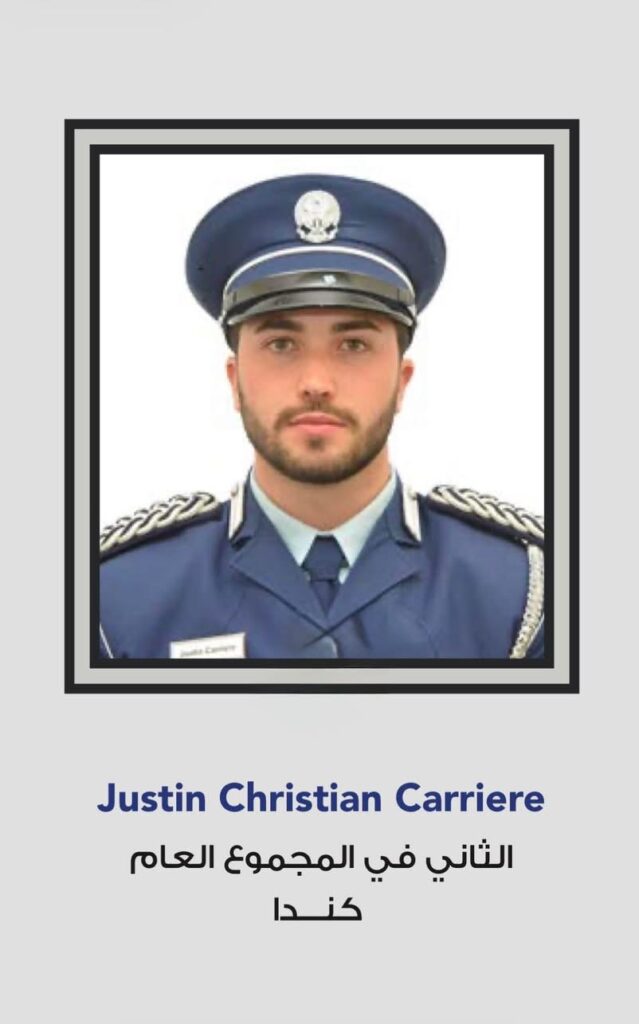
For five months, Winnipeg Police Service Constable Justin Carriere lived a reality far different from policing in Manitoba.
His days began before sunrise in the heat of Abu Dhabi, training alongside police officers from 35 countries while immersed in a demanding international academy environment focused on discipline, leadership, resilience, and cultural exchange.
“It was far more than just training,” Carriere said. “It was a valuable personal and professional experience that strengthened my skills, broadened my perspective, and reinforced the importance of adaptability, resilience, and cultural awareness in policing.”
Carriere was selected to participate in the International Police Exchange Program hosted through a partnership involving the International Association of Chiefs of Police (IACP), the United Arab Emirates Ministry of Interior, and the Abu Dhabi Police College.
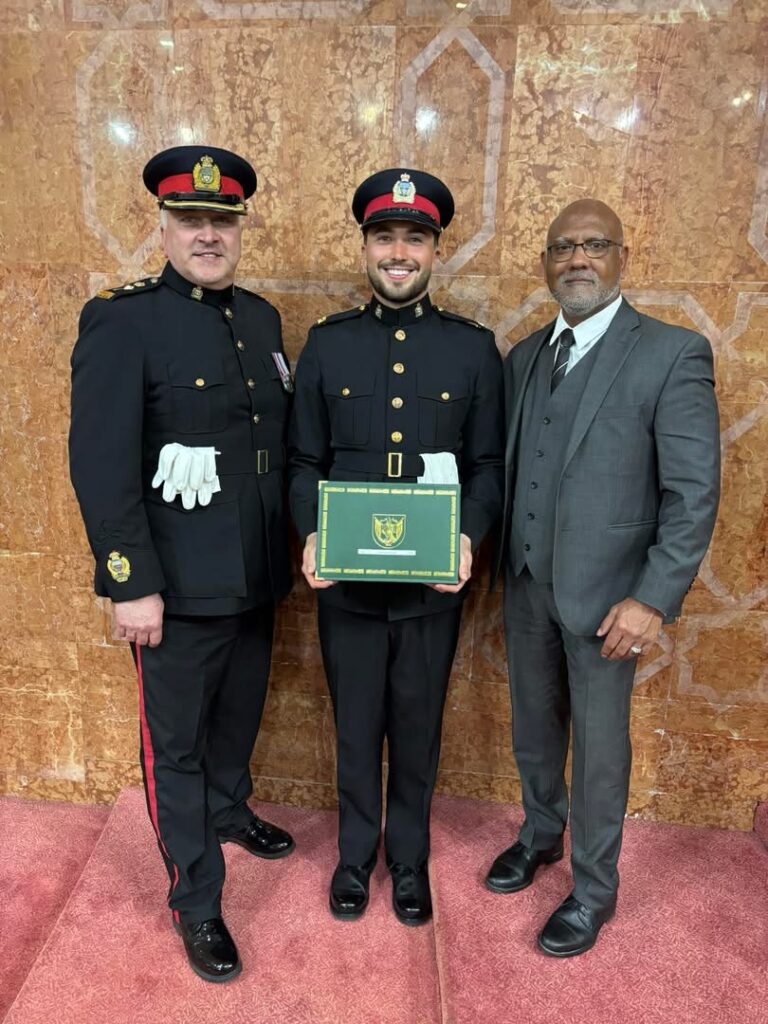
Representing both the Winnipeg Police Service and the Manitoba Association of Chiefs of Police, he joined an international cohort participating in a condensed five- to six-month police academy program combining physical training, academics, leadership development, and cultural immersion.
The experience was intentionally demanding.
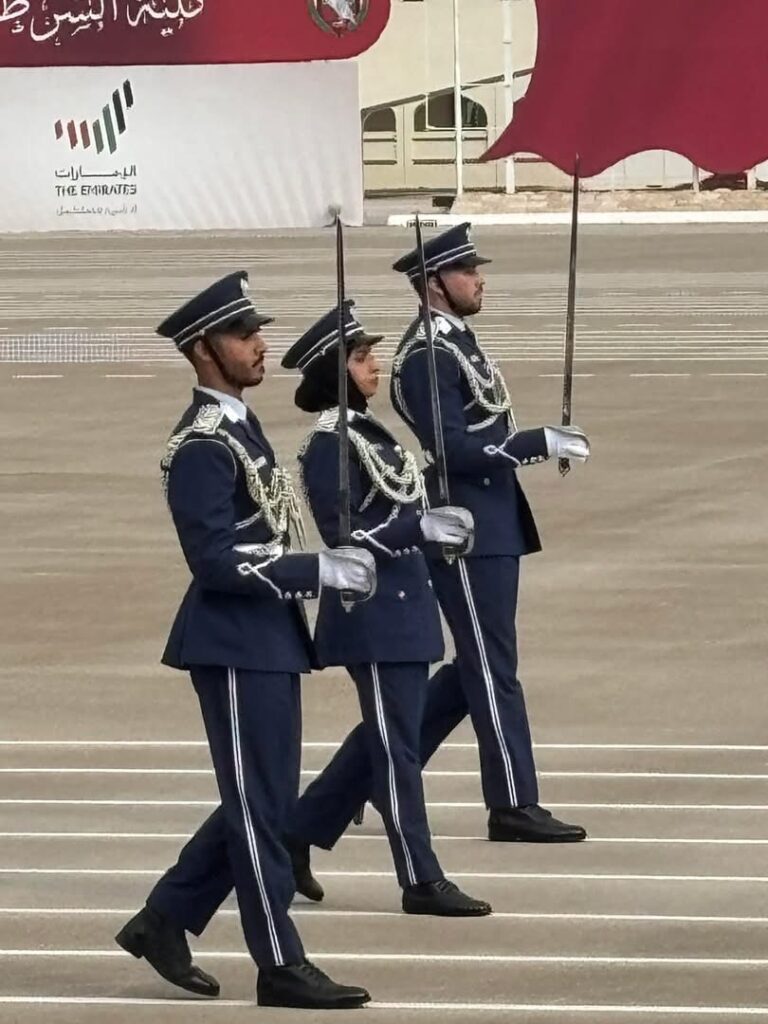
Each day began around 4:30 a.m. with physical training before transitioning into drill, firearms instruction, and full academic days that often stretched well beyond 12 hours.
Training frequently took place in temperatures reaching 40 to 42 degrees Celsius.
“Marching was especially challenging in the intense heat,” Carriere explained. “Spending long periods on the drill square under direct sunlight, often with little or no shade, tested both physical endurance and mental resilience.”
For the first time in the program’s history, international officers were fully integrated with local Emirati cadets rather than operating separately. Carriere’s cohort – Batch 40 – included 57 international officers and 170 local cadets.
“That completely changed the experience,” he said. “We were not treated as visitors. We were held to the same standards, schedules, and expectations as the local cadets.”
Over time, the structure and shared challenges created strong bonds between participants.
“Many of us even lived in the same barracks, which quickly broke down barriers and replaced formality with shared routines, late-night conversations, and genuine friendships built through shared experience.”
While the training itself was rigorous, Carriere said the relationships and cultural experiences became some of the most meaningful aspects of the program.
“The local cadets welcomed us not simply as classmates, but almost like family,” he said.
Participants were invited into homes, introduced to families, and immersed in Emirati traditions and celebrations. Experiences ranged from sharing traditional meals and attending weddings to exploring the desert and visiting landmarks such as the Sheikh Zayed Grand Mosque and Qasr Al Watan.
Those experiences also created opportunities for broader conversations about policing philosophies, technology, leadership, and public trust.
“One of the most valuable aspects of the program was the opportunity to compare policing approaches internationally,” Carriere said.
While Canada and the UAE approach policing differently, he noted both systems ultimately pursue the same objective: maintaining public safety while serving their communities.
Beyond the personal growth, Carriere believes programs like this carry long-term professional value for policing organizations and communities alike.
“In today’s policing environment, where organized crime, financial crime, and cybercrime often cross international borders, trusted relationships with officers in other jurisdictions can be incredibly important,” he said.
“Being able to connect with someone you have trained and lived alongside creates opportunities for collaboration and information-sharing that simply would not otherwise exist.”
For Carriere, the experience reinforced an important lesson about modern policing.
“Experiences like this demonstrate the value of learning from one another,” he said. “In policing, progress often comes not from working alone, but from learning together and building partnerships across borders.”
Interested in a deeper look at the program? Read Constable Justin Carriere’s first-person account, originally published in the MACP Magazine, where he reflects on five months of training, cultural immersion, and leadership development at the Abu Dhabi Police College.