
Earlier this winter, at 50 years old, a Brandon Police Service Staff Sergeant S/Sgt Kirby Saaras attended her first professional women’s hockey game.
Watching young girls proudly wearing jerseys, cheering for their favourite players, and seeing women compete professionally at the highest level was unexpectedly emotional.
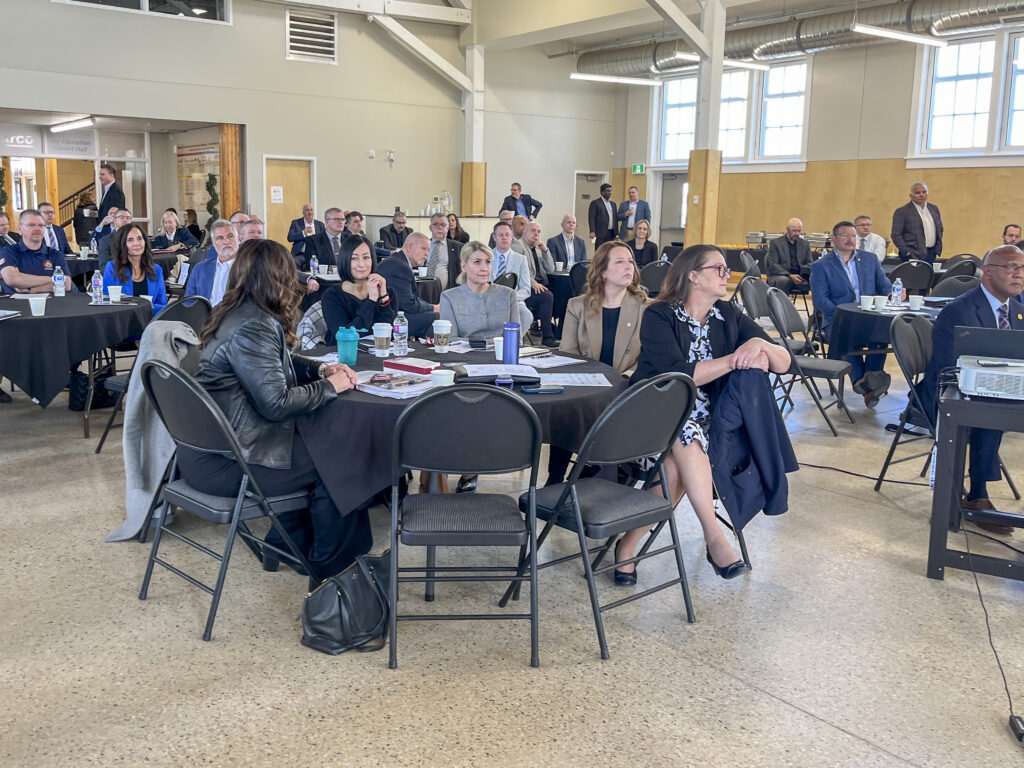
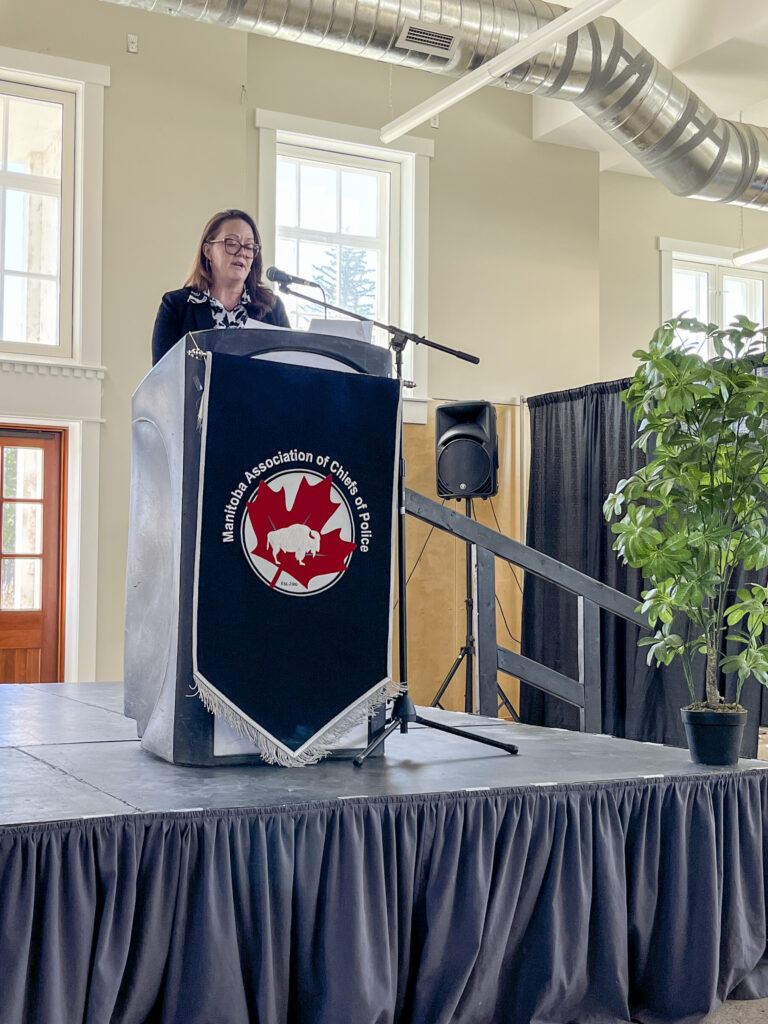
“Representation matters,” she told attendees during a presentation introducing Manitoba Women in Law Enforcement (MWLE) at this year’s Manitoba Association of Chiefs of Police conference in Brandon.
“Those young girls will grow up believing professional women’s sports have always existed. Many of us did not have that experience.”
The reflection became one of the defining moments of a presentation focused not on grievance or symbolism, but on connection, mentorship, and the evolving role of women in policing and law enforcement across Manitoba.
Until this year, Manitoba was the only province in Canada without an association dedicated to women in law enforcement.
That changed thanks in large part to the leadership and initiative of Detective Sergeant Jody Rogers of the Winnipeg Police Service, who helped bring together women from agencies across Manitoba to formally establish MWLE earlier this year.
The organization first met in January 2026 and includes both sworn and professional staff from law enforcement agencies across the province.
Its mission is straightforward: to connect, support, and advance women in law enforcement through networking, training, mentorship, peer support, and professional development opportunities.
For the Brandon Police Service Staff Sergeant, the initiative is rooted in personal experience.
“When I was growing up, I never met a female police officer until I was a young adult,” Sararas told conference attendees. “Looking back now, I believe that shaped how I viewed the profession and whether I believed there was a place for me in it.”
At the same time, she was careful to acknowledge how much policing has changed.
“I am incredibly proud of how far Brandon Police Service – and policing more broadly – has come since I joined in 2000,” she said.
Still, she described entering a profession where women in operational policing roles often worked in isolation, particularly within smaller communities and rural services.
“Because women were often spread across different assignments or specialized areas, there were long stretches where I rarely worked alongside another woman,” she explained.
One of the moments that stayed with her most came while attending a call alongside an RCMP member in Westman.
“To see another woman in law enforcement at that time was rare,” she recalled. “We immediately bonded over our shared experiences, and that connection became an important source of peer support throughout our careers.”
That support, she said, continues to matter today.
While women have increasingly moved into leadership and specialized positions across policing, many still value opportunities to connect with colleagues who understand their experiences firsthand.
“One of the female officers on my shift has told me how much she values simply having another woman there to talk to,” she said. “She works well with her male colleagues and values their guidance, but there are experiences unique to women in law enforcement that are easier to discuss with someone who understands them firsthand.”
Deputy Chief Greg Hebert of the Brandon Police Service said the presentation reinforced both how far policing has come and why organizations like MWLE remain important.
“Historically, policing has always been underrepresented by women,” Hebert said following the presentation. “Much like planting a tree, the best time to do it(create an organization like MWLE) would have been 20 years ago. The second-best time is to do it now.”
Hebert said hearing the Staff Sergeant reflect on changes within policing over the course of her career was particularly meaningful.
“When you listen to how the organization has changed over the 20-plus years she’s been with us, it’s inspiring,” he said. “We are in a much better place than we once were, and that’s an important message too.”
Importantly, he emphasized that organizations like MWLE are not about suggesting women are new to policing.
“Women have been here for a long time and have been doing amazing work,” he said. “Different perspectives strengthen organizations and improve how we serve communities.”
Detective Sergeant Jody Rogers of the Winnipeg Police Service said the goal of MWLE is not to create division, but to create stronger connections across the profession.
“There is strength in connection,” Rogers said, explaining that the idea for MWLE grew after seeing similar organizations emerge in other provinces and recognizing Manitoba lacked a comparable network.
“It was long overdue that Manitoba had something like this to help support women and connect them across the province,” she said. “This is about support, learning, training, connection, and networking.”
Rogers emphasized that many of the mentors and sponsors who supported her career were men, and that MWLE is intended to complement – not replace – those relationships.
“It’s another resource and support tool designed to strengthen the profession.”
That focus on mentorship, sponsorship, and peer support resonated throughout the presentation.
The Staff Sergeant pointed to comments shared earlier this spring by Victoria Police Chief Fiona Wilson during MWLE’s launch event at Government House.
“Mentorship offers guidance, perspective, and support,” Wilson explained. “Sponsorship is different. Sponsorship is active. It carries weight. It means attaching your credibility to someone else’s growth and creating opportunities for them to succeed.”
For MWLE organizers, that distinction matters.
The organization has already committed to participating in the 30Forward Initiative, a Canadian movement focused on improving recruitment and representation within policing.
Next month, MWLE members will meet virtually with initiative representatives to discuss how Manitoba agencies can continue supporting mentorship, development, recruitment, and leadership opportunities across the profession.
The organization has also launched a website and social media presence aimed at helping members stay informed, connected, and engaged as MWLE continues to evolve.
Finally, MWLE announced plans to sponsor a Manitoba member to attend the International Association of Women Police conference this fall in Banff, Alberta. The goal is to provide a professional development opportunity intended to support both individual growth and broader leadership development within policing.
For many attending the MACP conference, however, the strongest takeaway from the presentation was much simpler than that.
Women in policing are not new.
But organizations built around connection, mentorship, visibility, and shared experience may help ensure the next generation entering the profession never feels alone within it.
That’s something worth cheering for in any arena.
International Opportunity for Manitoba Members
As part of its early growth, Manitoba Women in Law Enforcement (MWLE) has announced plans to sponsor one Manitoba member to attend the 2026 Women in Policing Conference this fall in Banff, Alberta.
The opportunity is intended to support professional development, leadership growth, and international networking within the law enforcement community.
Members interested in attending will be invited to submit a short essay outlining how they would use the experience to support both their own development and the profession more broadly.
MWLE says additional details, eligibility information, and application timelines will be shared through its website and social media channels in the coming weeks.